


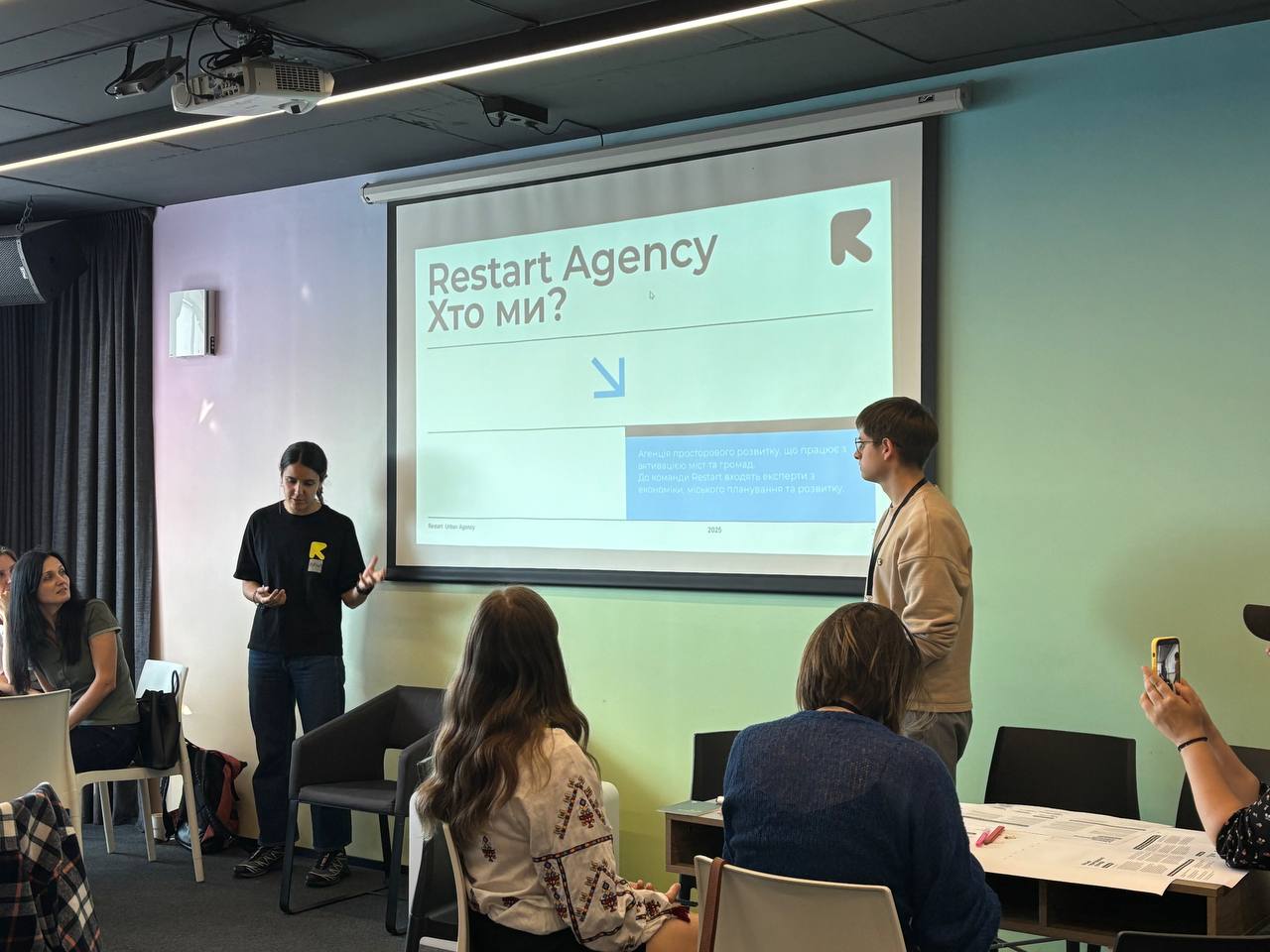
Since its inception in 2018, the Restart agency and its earlier iterations have repeatedly adapted their focus and principal offerings in response to societal challenges, developments within the profession, and the evolving landscape of Ukrainian cities and hromadas.
At the outset, following the Revolution of Dignity, our initial engagement with urbanism centred on encouraging proactive citizens to effect change within their own environments. This saw the creation of the ‘Comixans’ collective, dedicated to visually communicating urban change through a series of urban comics. Over time, this approach evolved into work with public spaces, with a strong emphasis on engaging a wide range of user groups. These activities were actively supported by international technical assistance programmes, which played a crucial role in cultivating a new generation of urbanists in Ukraine. During this period, we formally established ourselves as the ‘Zvidsy’ agency and began more systematic collaboration with communities, capitalising on the momentum of decentralisation reform.
A significant influence on spatial development approaches in Ukraine was the ‘GIZ Integrated Urban Development’ project. The adoption of this holistic framework enabled us to look beyond public spaces and consider all sectors of the city. Gradually, we began contributing to the development of spatial strategies, initially for cities and subsequently for wider hromadas.
With the onset of the full-scale war in Ukraine, we gave increasing consideration to a strategic, considered approach to reconstruction, grounded in new strategies and methodologies. However, two key factors have influenced this approach: the complexity of implementing comprehensive initiatives during wartime and the protracted nature of the conflict, coupled with the urgent need for practical and swift results in the sectors most in need of attention.
During 2024, we held numerous discussions on what practical measures we could implement during wartime to achieve the greatest immediate impact and make full use of our professional expertise. Ultimately, the answer lay in supporting those most vital to Ukraine today — the military. We are deeply committed to this and have swiftly introduced a culture of team- and individual-level fundraising, offering direct assistance to specific units.
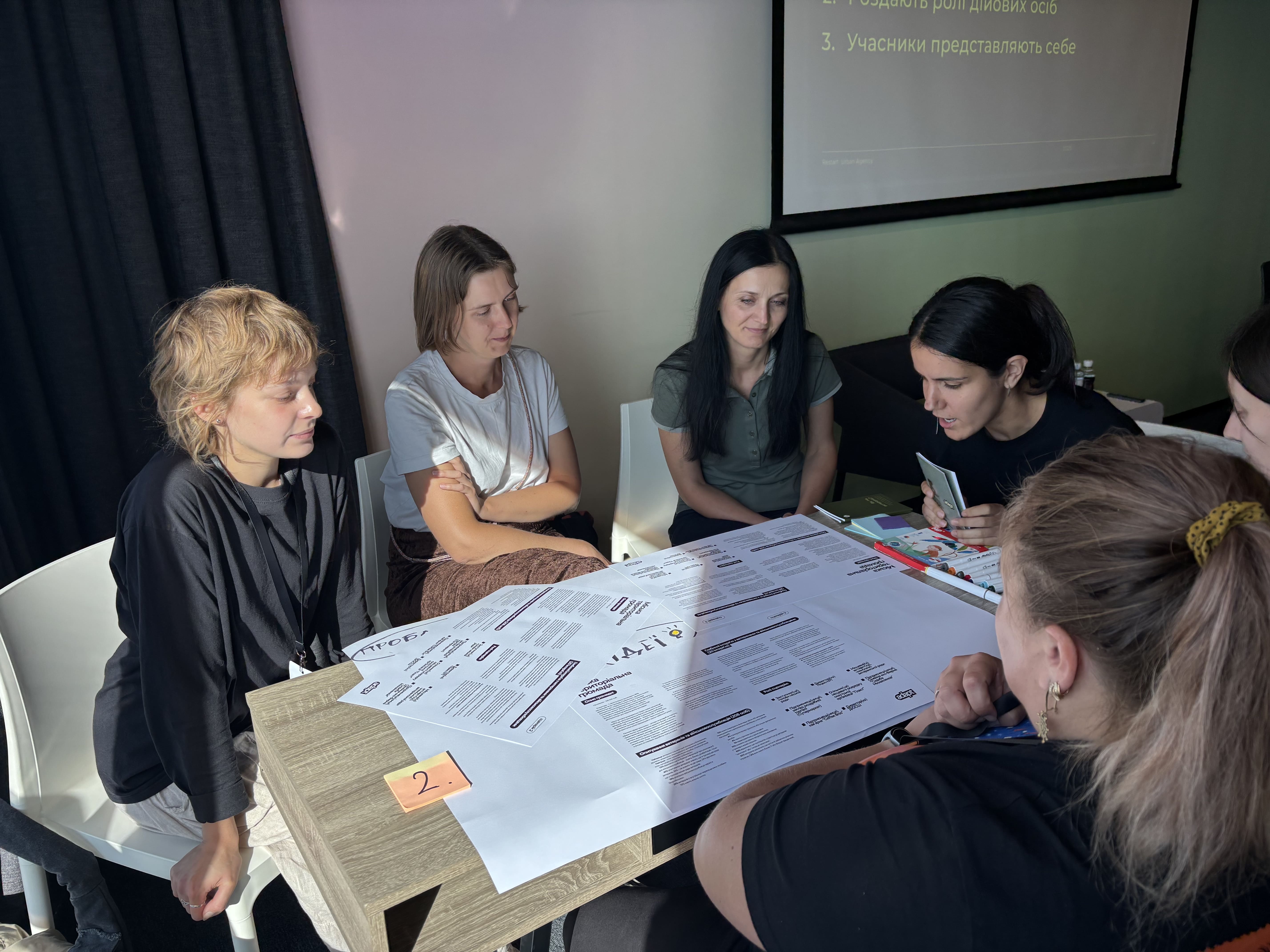
However, we soon recognised that we could contribute even further framework should guide cities and hromadas in their development and planning, embracing new concepts, values, and methodologies that address the needs of veterans, military personnel, and their families, whilst fostering dialogue with other social groups.
.jpg)